Portugal Jewels reopens historic 1819 space
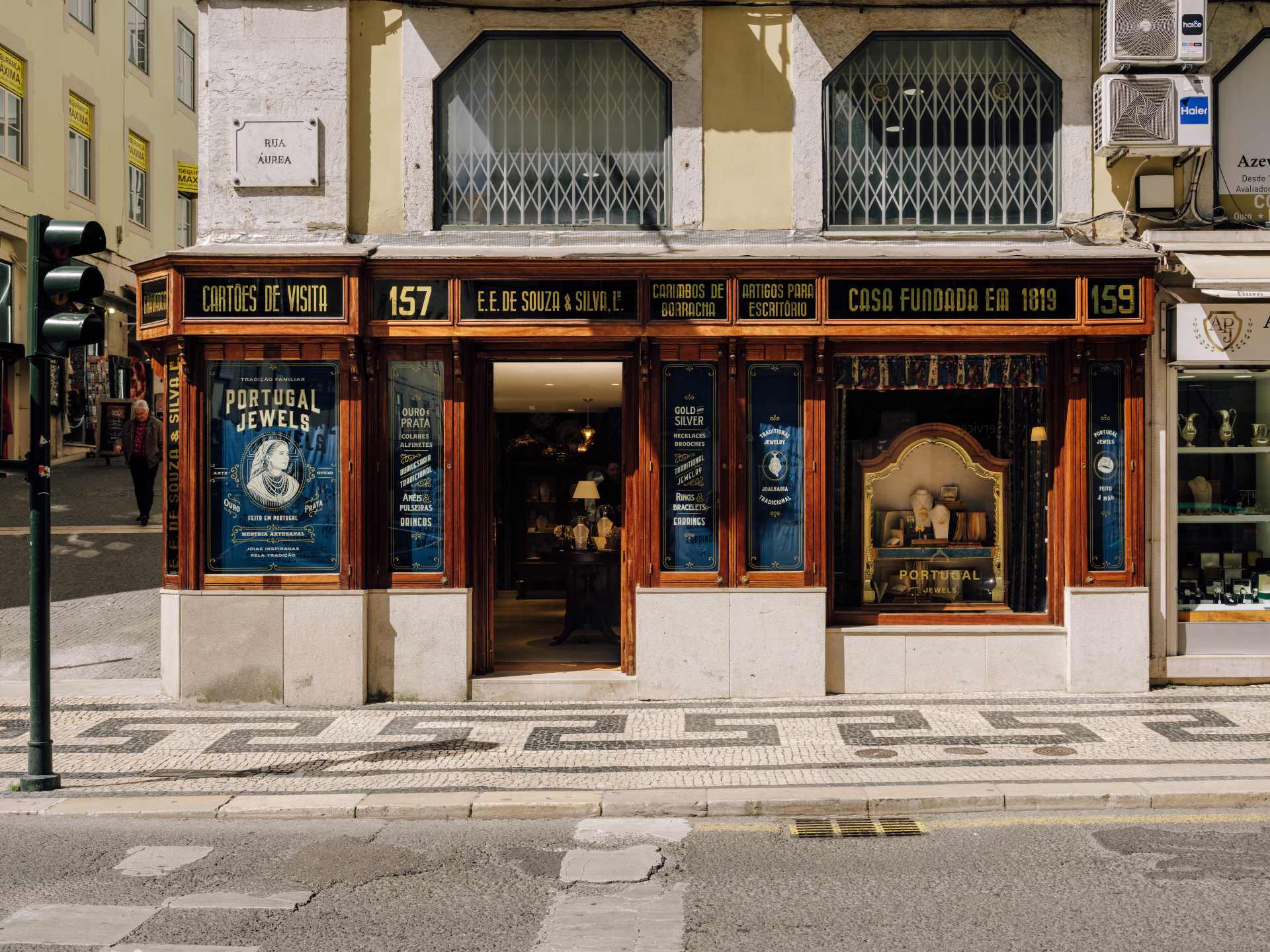
In 1760, by royal decree, a street in the Pombaline Lower Town (Baixa pombalina) was designated for Lisbon’s goldsmiths and jewelers. Nearly six decades later, in 1819, a master engraver opened the country’s first stamp and seal workshop at number 157. By the end of the 19th century, the establishment held the charter of the Portuguese Royal House. In 2025, with the previous owner preparing for retirement and having no successor, the 200-year-old house was sold and now reopens as Portugal Jewels’ second Lisbon store.
This marks the second time in two years that Portugal Jewels has chosen to restore rather than open a store from scratch. In May 2025, the brand reopened Barbearia Campos in Largo do Chiado—founded in 1886—preserving the original counters and furniture inside a fully functioning jewelry shop. Rua Áurea now joins this initiative: two historic Lisbon streets kept alive by the same brand.
Preserving Heritage and Avoiding Industrialization
With its production entirely based in the North of Portugal through a network of independent goldsmiths, Portugal Jewels maintains its commitment to rejecting industrialization. The new store is the physical manifestation of this philosophy. Where stamps were once engraved, jewelry now resides, yet the brand opted to keep the passage of time intact: the facade, the structure, and the marks preserved within the space.
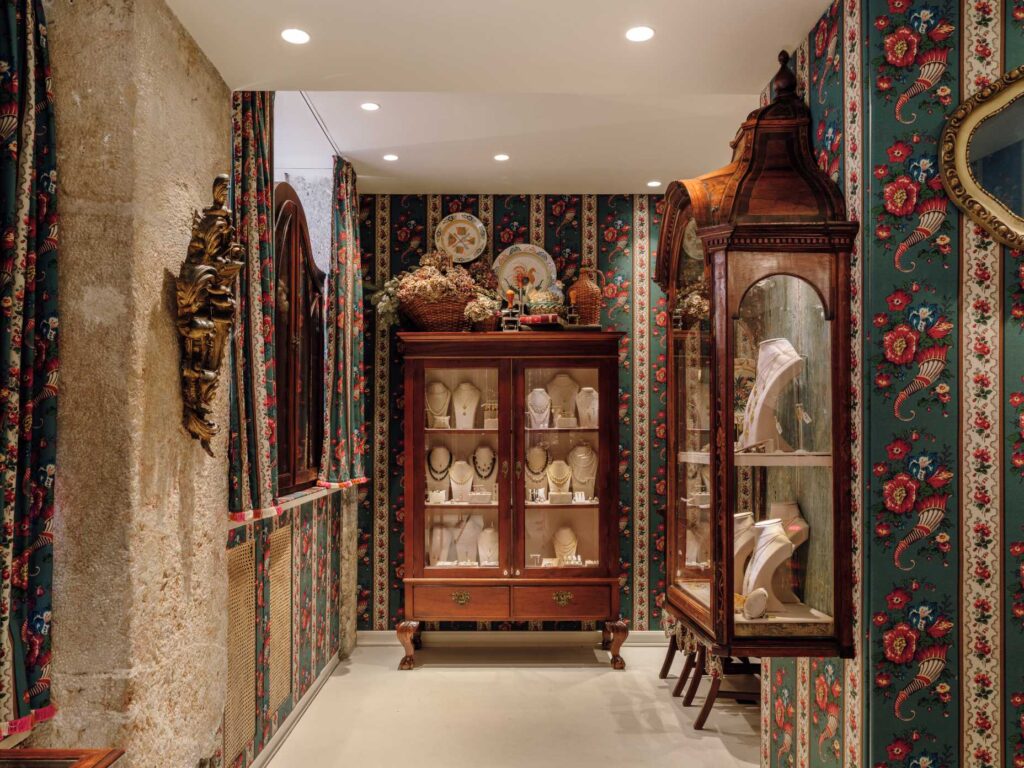
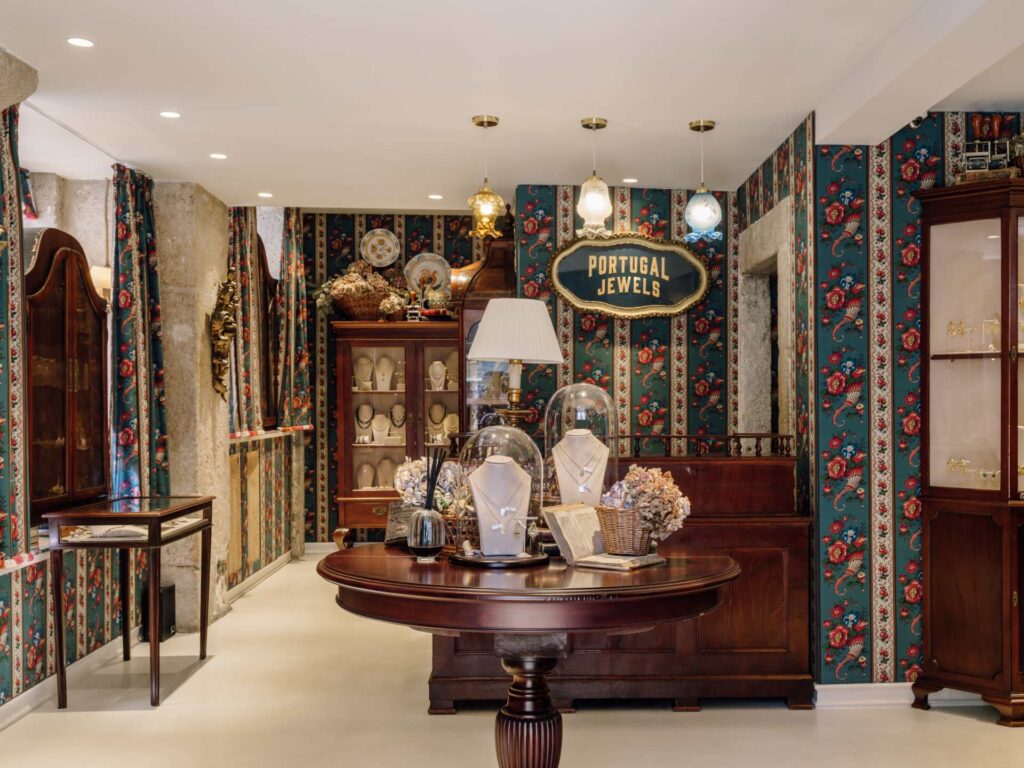
The space was conceived by Ricardo Preto, marking his first jewelry store design. The interior is entirely lined with Chita de Alcobaça, an 18th-century printed fabric traditionally used in Portuguese country houses and dowries. Plates from Fiação Ratinho and hand-woven wicker baskets complete the decor, set atop restored furniture. The floral patterns, colors, and materials all reference the domestic universe for which Portuguese jewelry was originally crafted: homes, traditional festivals, and dowries.
“I wanted anyone who steps inside to feel like they are in a Portuguese home, not a store. The chintz, the plates, the wicker—it is the domestic memory that frames the jewelry,” notes Ricardo Preto.
The facade evolved over two centuries; the restoration preserved what remained. The exterior glass panels were repainted by hand in a period style inspired by the originals, staying true to the design from the early 20th century.
According to Alexandre Bastos, “Portugal Jewels exists at the meeting point between the old and the new: traditional Portuguese techniques, made for the way we live today. This 1819 building is that exact same idea in physical form.”
In 1760, the street was destined for goldsmiths. More than two centuries later, jewelry returns to Rua Áurea through a house that outlived the kingdom that shaped it.
21 de May, 2026
Atualidade